

艺术家Artist:lilyma马莉
策展人Curator:赵叶索Narcis Zhao
艺术顾问Art Consultant:单钰Shane
展览时间Exhibition Dates:
2026.7.24-2026.8.24
开幕时间Opening:
2026.7.24 15:00
地点Venue: NON 艺术空间 NON Space
地址Address:中国北京市朝阳区东坝镇半截塔路郎园Station D5-1
Langyuan Station D5-1, Banta Road, Dongba Town, Chaoyang District, Beijing, China
Lilyma's Theatre of Dialogue by 单钰 ShaneThe Lingering Spring: Lilyma’s Theatre of Dialogue
“The Lingering Spring” is not a depiction of seasonal scenery, but a naming of a state—one that points to vitality emerging through obstacles, and colors spilling beyond boundaries. Artist Lilyma’s solo exhibition The Lingering Spring takes “dialogue” as its underlying thread—dialogue between human and nature, human and life, human and human. It weaves a purely feminine perspective with immersive lived experience, while also attempting a male observational viewpoint, building a thoroughfare between emotion and expression, ideals and everyday life. These seemingly opposing categories do not constitute conflict on her canvas, but rather a continuous intertextuality and negotiation.
Within Lilyma’s body coexist two textures. One is the tenderness and sensitivity of a woman from Jiangnan—delicate as the misty diffusion of her watercolors. The other is a near-masculine solidity and power—decisive and bold as the assured fluency of her layered oils. This is not a confusion of gender identity, but the complete acceptance of one’s own energy by a whole being. Over a decade of experience in traditional Chinese opera endowed her with a disciplined bodily-spiritual interplay; her training as a film and television director taught her verbal expression. But painting gave her an absolute freedom—here, softness and strength need not take sides, gender need not be emphasized, and isms need not confront one another. They can all coexist.
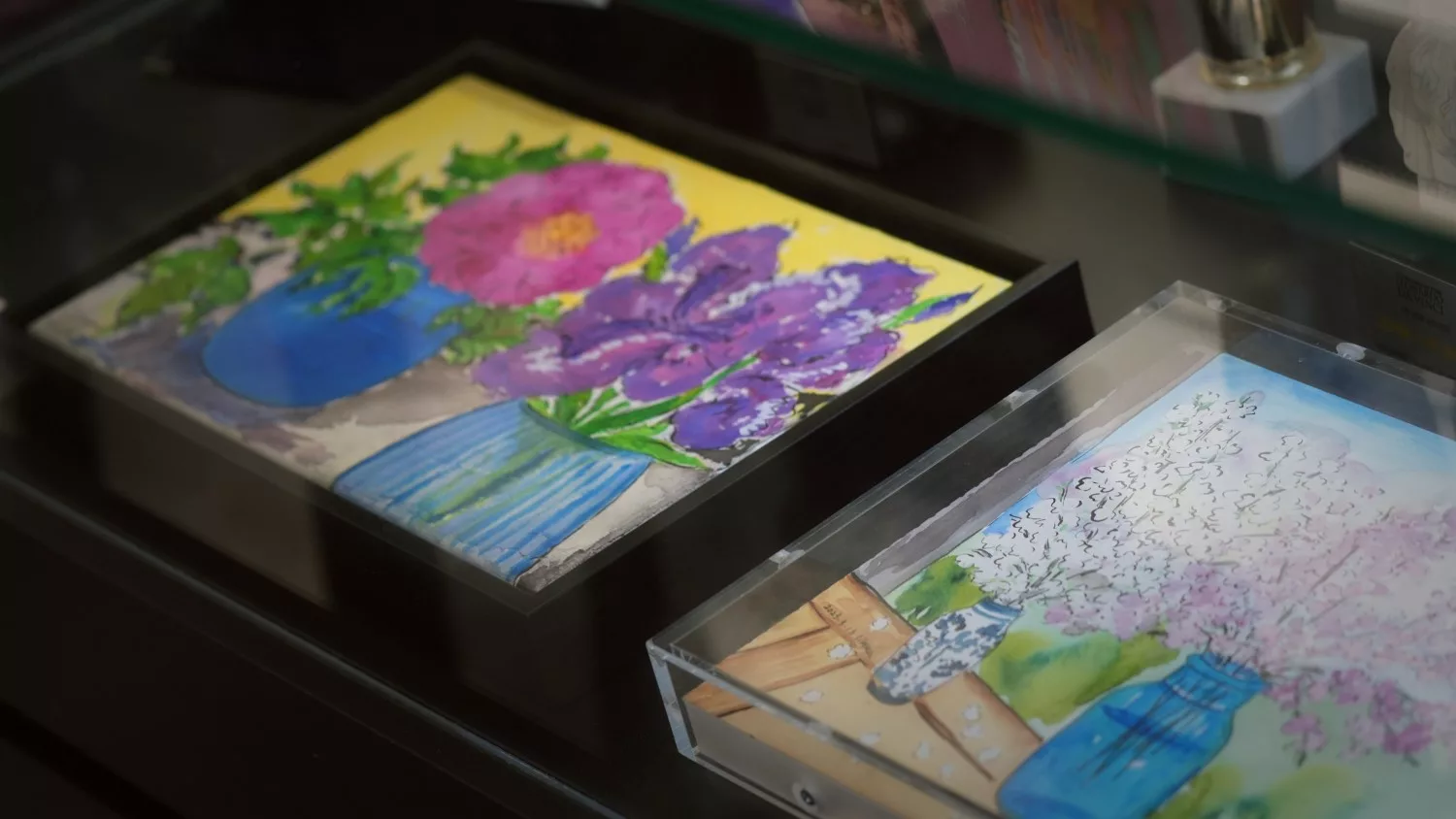
More importantly, Lilyma’s paintings never come from second-hand experience. To paint flowers, she first plants roses, hydrangeas, and Chinese roses in her own garden—from soil preparation to pruning, from waiting for buds to witnessing withering. The entire life cycle, personally experienced, imbues her floral works with a carnal memory, a warmth that no image reference can replace. In her words, every flower is a unique and independent life force, worthy of celebration and eternity. To paint flowers is perhaps another form of “burying flowers.” To paint landscapes, she travels to those lands herself—the tides of the ocean, the sway of tree shadows, the babbling of streams—absorbed by her body before being released through her brush. If she paints a gathering, she hosts one herself, letting genuine conversation and laughter be present. Even dreams—things never seen in life or on screen—are real visions experienced in her dreams. This is not a posture; it forms a mutual corroboration with the texts and images she has persistently documented over the years. This is why Lilyma sometimes reworks pieces from three or five years ago—her sensations and memories remain accessible without rupture. She maintains a direct point of contact with the world, relying on neither second-hand images nor established paradigms—authentic and continuous, letting emotions move with the heart, letting the brush settle over time.
This mode of creation, in an age of image saturation, appears almost stubborn and clumsy. While some artists begin their work with image searches on screens, Lilyma is like an ancient soul living multiple lifetimes in the present, believing that only the world experienced through body and spiritual consciousness is worthy of being painted. The French philosopher Maurice Merleau-Ponty, in Phenomenology of Perception, argued that meaning does not exist a priori in ideas, but is generated through the continuous interaction between body and world. Lilyma’s paintings are material records of this generative process. She is not painting the idea of “flower,” but the entire process of watering, pruning, waiting, breathing, and withering. Every seemingly spontaneous brushstroke is rooted in a real encounter between her and the object.
In Lilyma’s practice, there is another, more contemporary dialogue at the intersection of gender temperaments. In the long tradition of visual art, women have long been positioned as objects to be gazed upon. Lilyma’s strategy is not avoidance, but a gentle reclamation—a breathing. Taking herself as the prototype, she presents female desire, languor, pleasure, and contemplation without concealment. The canvas becomes an extension of her cultivated experience. Her compositions are always vibrant and abundant—flowers bloom wantonly, colors clash intensely. Yet upon closer look, beneath those seemingly raucous brushstrokes hides a solitary observer, a cherisher of beauty itself, a practitioner of the ability to “step in and out” of a subject. She combats nothingness with high-saturation colors, and responds to those who try to define what “women’s art” should be with open celebration.
The term “The Lingering Spring” is thus endowed with new meaning. Spring is the instinct to grow despite obstruction; color is the energy released when difference manifests. The dialogue between the two is precisely the metaphorical model of Lilyma’s practice: with painting as a bridge, she reunites fragmented categories, gives voice to suppressed expressions, and allows obscured colors to bloom. And blooming itself is the gentlest resistance to all rigid boundaries.
春色:马莉的对话剧场
“春色”并非对季节景色的描绘,而是一种状态的命名,它指向生机在阻碍中的涌现,指向色彩在边界处的溢出。艺术家lilyma马莉个展《春色》,以“对话”为隐线,在人与自然、人与生命、人与人之间,纯粹的女性视角和生活沉浸式体验,并尝试男性观察视角,在情绪与表达、理想与日常之间铺设了通途。这些看似对峙的范畴,在她的画布上并不构成冲突,而是一种持续的互文与协商。
lilyma马莉的身体里就同时存在着两种质地。一种是江南女性的温柔与敏感,细腻如她笔下水彩的氤氲浸透;另一种是某种近乎男性的浑厚与力量,果断豪放如她油彩堆叠时的笃定与酣畅。这不是性别身份的含混,而是一个完整生命体对自身能量的全然接纳。十多年完善戏曲舞台经验曾赋予她程式化的身体精神交汇体验,影视导演的训练又告诉她语言的表达,但,绘画给了她另一种绝对的自由,在这里,柔与刚不必站队,性别也无须强调,主义与否更无须对峙,它们可以同时在场。
而更重要的是,lilyma马莉的绘画从不来自二手经验。她要画花朵,就先在花园里亲手栽种玫瑰、绣球、月季,从培土到修剪,从等待花苞到目睹凋零,整个生命周期的亲历,让她的花卉作品携带着一种肉身的记忆,那是任何图像参考无法替代的温度。按她的话来讲,每一朵花儿都是独特独立的生命力,值得去歌颂、永恒。画花,也许是另一种形式的“葬花”。她要画风景,就亲自抵达那片土地,海洋的潮汐、树影的婆娑、潺潺的溪水,被她的身体吸收后再从笔端释放;她若画一场聚会,就会去组一个局,让真实的交谈与笑声在场;即便是梦境,那些从未在任何生活和影像里看到的东西,都是梦境中真实所见所体验。这不是一种标榜,这与她的一直坚持记录的文字、影像形成了共同互证的关系。所以lilyma马莉有时也会对三五年前的作品重新描绘,她的感觉与记忆可以重新被调阅而不会断档,她始终保持着与世界的直接触点,不借由二手图像,不依赖既成范式,真实而连贯,让情绪随心而动,让画笔随时间而沉淀。
这种创作方式,在图像泛滥的当代显得近乎固执、笨拙。有的艺术家工作始于屏幕上的图片检索,而lilyma马莉像一个现世经历几世人生的古代人,坚信只有被身体和精神意识体验过的世界才有资格入画。法国哲学家梅洛-庞蒂在《知觉现象学》中指出,意义并非先验地存在于观念之中,而是在身体与世界的持续交互中生成。lilyma马莉的绘画正是这种生成过程的物质化记录,她不是在画“花”的理念,而是在画她浇水、修剪、等待、呼吸、凋谢的完整过程。画面中每一笔看似随性的色彩,都根植于她与物象之间真实发生过的相遇。
在lilyma马莉的创作中,还有一种更具当代性的对话发生于性别气质的交界处。在视觉艺术的漫长传统中,女性长期被安置为被观看的客体。lilyma马莉的策略不是回避,而是一种温柔的收复、呼吸。她以自己为原型,将女性的欲望、慵懒、欢愉与沉思毫无遮掩地呈现,画布成为她种植经验的延伸。她的画面里总是热闹的、丰盛的,花朵肆意绽放,色彩剧烈碰撞,但细看之下,那些看似喧闹的笔触深处藏着一个孤独的观察者,一个对美好本身的珍视者,一种可以跳进、跳出的‘课题分离’实践。她用高饱和的色彩对抗虚无,用坦荡的赞美回应那些试图定义“女性艺术”应该怎样的声音。
“春色”一词,在此被赋予新的意义。春,是被阻碍后依然生长的本能;色,是差异显现时释放的能量。两者的对话,正是lilyma马莉创作的隐喻模型:她以绘画为桥梁,让被割裂的范畴重新相遇,让被压抑的声音找到出口,让被遮蔽的色彩获得绽放。而绽放本身,就是对一切僵化边界最温柔的抵抗。Lilyma's Theatre of Dialogue by 单钰 Shane
文/单钰